AsaMai Hindu Temple Washington Metropolitan
230 Awkard Lane Silver Spring MD 20905

OUR History!
Hinduism in Afghanistan
Historical and linguistic analysis of the region confirms that parts of modern-day Afghanistan were historically part of the Vedic and Hindu-Buddhist cultural sphere. The name Upgansthan (or Upa-Gana-Sthana) is cited in some historical perspectives as a Sanskrit term meaning a "sub-principality" or "place inhabited by allied tribes," which some believe evolved over time into the modern name Afghanistan.
Historical Background of Hinduism in Afghanistan

-
Ancient Presence: Hinduism is among the oldest religions in the region. For roughly 5,000 years, the area was a center for Hindu and Buddhist cultures before the widespread adoption of Islam over the last thousand years.
-
Hindu Dynasties: The region was governed by several Hindu and Buddhist dynasties, most notably the Hindu Shahi (or Brahmin Shahi) dynasty, which ruled the Kabul Valley and Gandhara until the late 10th century.
-
Archaeological Evidence: Excavations have uncovered numerous artifacts, such as a 4th-century statue of Ganesha north of Kabul and an 8th-century marble Ganesha in Gardez consecrated by the Turk Shahi King Khingala.
-
Cultural Geography: Many Afghan locations have roots in Sanskrit. For instance, Balkh derives from Bhalika, Kandahar is often linked to the ancient kingdom of Gandhara, and Kabul originates from Kubha, Baghram derives from Bhagiram.
Etymology and the Name "Upgansthan"
The term "Upgansthan" is frequently cited in sources exploring the Hindu roots of Afghanistan
-
Up (Upa): Meaning "near" or "sub" in Sanskrit.
-
Gana: Referring to a "principality," "tribe," or "province".
-
Sthan (Sthana): A common Sanskrit suffix meaning "land" or "place".
Scholars like Varahamihira (6th century CE) referred to the people of the region as Avgana in the Brihatsamhita. Another widely accepted linguistic theory suggests "Afghan" derives from the Sanskrit word Ashvaka, meaning "horseman," referring to the famed cavalry of the ancient tribes in the Hindu Kush

.png)
Indigenous Hindu Population
Hindu Afghans are indigenous to the region, with families having lived there for generations. They were historically a significant and prosperous community, particularly active in trade and finance in cities like Kabul, Kandahar, and Jalalabad. Over the past several decades, however, this community has dwindled from over 50,000 to a very small number due to conflict and religious persecution.
Major Archaeological Discoveries
Archaeological excavations across Afghanistan have unearthed numerous sites that confirm a deep-rooted historical presence of Hinduism. These discoveries include temple complexes and significant marble statuary depicting various deities, often dating from the 4th to the 10th centuries CE during the rule of dynasties like the Turk Shahis and Hindu Shahis.

.jpg)

-
Gardez Ganesha: One of the most famous finds is a 5th-century marble statue of Ganesha discovered in Gardez. An inscription on its base states it was consecrated by King Khingala. It is currently housed at the Dargah Pir Rattan Nath temple in Kabul.
-
Khair Khaneh Temple (Kabul): This Brahmanical temple site, excavated near Kabul, yielded a distinctive 7th-century marble statue of Surya, the Hindu sun god, depicted in a tunic and boots.
-
Tepe Sardar (Ghazni): A large complex where archaeologists discovered a colossal clay sculpture of Durga slaying the buffalo demon Mahishasura. This site highlights the coexistence of Hindu and Buddhist traditions, as the Hindu shrine was integrated into a larger Buddhist monastery.
-
Tapa Skandar: Located north of Kabul, this site contained a rare marble statue of Shiva and Parvati (Umamaheshvara) dating back to the late first millennium CE.
-
Mes Aynak (Logar): While primarily known for its vast Buddhist city, this multi-layered site also contains evidence of much older settlements and potentially Hindu temples, with artifacts like ancient gold coins featuring Lord Shiva and the bull Nandi.
-
Mundigak (Kandahar): This Bronze Age site (circa 3000 BCE) includes a "palace" and "temple" complex with figurines and artifacts that suggest cultural links to the Sarasvati-Sindhu (Indus Valley) Civilization
Documented Historical Temple Sites
Historical records and ruins point to a widespread network of temples across the region:
-
Ghazni: Ruins of multiple temples dedicated to Lord Vishnu, Shiva, and Brahma have been identified.
-
Kabul: The Asamai Hindu Temple, named after the goddess of hope, features an Akhand Jyoti (eternal flame) said to have been burning for centuries.
-
Kandahar: Known as the ancient kingdom of Gandhara, it once housed temples like the Gandhari Mandir and Shiv Mahalaya.

Hindu Shahi dynasty

The Hindu Shahi dynasty (approx. 822–1026 CE) served as the "Guardians of the Northwestern Gates," holding the frontier against early Islamic expansions into the Indian subcontinent for nearly two centuries. Their reign was characterized by a transition from the earlier Turk Shahi line to a Brahmin-led Hindu administration, which shifted its focus toward an active defense of Hindu-Buddhist civilization.
Jayapala (reigned 964–1001 CE) was the prominent ruler of the Hindu Shahi dynasty whose dominion stretched across eastern Afghanistan, Gandhara, and the Punjab region. Celebrated as a fierce defender of his borders, he led a lifelong struggle to protect the region from the expanding power of the Turkic Ghaznavid Empire
Reign and Geography
-
The Domain: Jayapala's kingdom extended from the Laghman valley in modern-day eastern Afghanistan to Kashmir, and from Sirhind to Multan. His administrative and strategic centers included Peshawar and the Punjab region.
-
The Shahi Legacy: The Hindu Shahi rulers of Afghanistan are best remembered as a crucial Hindu frontier bastion in what is now modern Afghanistan and northern Pakistan.
-
The Decisive Battle and Legacy
-
Battle of Peshawar: In late 1001 CE, Jayapala confronted Mahmud of Ghazni’s formidable forces near Peshawar. Adverse weather conditions (such as heavy snow) severely crippled Jayapala's army, leading to a decisive defeat.
Key Rulers and Defensive Struggles
Key Rulers of the Hindu Shahi Dynasty
-
Kallar (c. 822–850 CE): A Brahmin vizier who founded the dynasty by deposing the last Turk Shahi king, Lagaturman. His accession marked a shift toward a more resolute defensive posture against external threats.
-
Lalliya (c. 880–902 CE): Noted by the Kashmiri chronicler Kalhana as a courageous ruler, he successfully re-conquered Kabul from the Saffarids and consolidated Shahi control over Zabulistan and Gandhara.
-
Jayapala (r. 964–1001 CE): The most celebrated defender, Jayapala faced the growing power of the Ghaznavids under Sabuktigin and later Mahmud of Ghazni. Despite multiple defeats, he is remembered for his unyielding resistance; after a major loss in 1001 CE, he chose ritual self-immolation rather than live in dishonor.
-
Anandapala (r. 1001–1010 CE): Attempted to forge a pan-Indic coalition of Hindu kings from Delhi, Ajmer, and Kannauj to resist Mahmud of Ghazni. Although defeated at the Battle of Waihind in 1008 CE, the alliance demonstrated the recognized strategic importance of the Shahi buffer.

Strategic Significance
-
The Shahi rulers moved their capital from the vulnerable Kabul to Udabhandapura (modern-day Hund) on the Indus River to better command the vital river crossings. Their stubborn defense delayed the Islamization of northwest India for centuries. Without this barrier, the plains of Punjab and the Ganges might have been reached by invading forces as early as the 8th century.
Cultural and Historical Legacy
-
Fortification of Kabul: The ancient defensive walls still visible on the mountains around Kabul were built during this era to protect the city from Saffarid invasions.
-
Patronage of Arts: They were major patrons of Shaivism and Vaishnavism, and their distinctive "Bull and Horseman" silver coins remained in circulation long after their fall.
-
Final Extinction: The dynasty finally collapsed in 1026 CE following the defeat of Bhimapala, ending the last sovereign Hindu rule in the region and opening the gates for the wider conquest of northern India


Shahzada Money Exchange Market
Sarai Shahzada
Sarai Shahzada is Afghanistan's largest financial center and the primary hub for currency exchange and informal banking in Kabul. Located in the city's central first district, it serves as the beating heart of the country's economy, where both local and foreign currencies are traded daily in volumes reaching hundreds of millions of dollars.
Shahzada Market Kabul
Core Functions and Significance
-
Currency Exchange Hub: The market houses approximately 400 to 450 exchange offices. It is where the value of the Afghan Afghani (AFN) is effectively determined by supply and demand.
-
The Hawala Network: Beyond simple currency trading, it is the central node for the Hawala system, an ancient informal money transfer network. This system allows Afghans to send and receive remittances from over 120 countries within minutes, often bypassing traditional banks.
-
Diverse Trade: While famous for money, the market also serves as a ground for goldsmiths, bankers, and precious stone sellers.
-
Economic Barometer: Because so much of Afghanistan's cash flow passes through its halls, observers often visit Sarai Shahzada to "take the pulse" of the nation's political and economic stability.
-
Historical Background
-
Origins: While some records link the market's history to the Mughal era, the modern marketplace was established in 1954 by Prince Abdul Aziz (Shahzada Abdul Aziz), a descendant of Ahmad Shah Durrani.
-
Resilience: The market has survived decades of conflict, including the civil wars of the 1990s, where it remained a vital, albeit dangerous, center of business even as other sectors collapsed.
-
Modern Management: The market was recently reconstructed under the leadership of Shahzada Babur Shah Sadozai, the youngest son of the founder, to improve professional standards and security.
-
Operations and Impact
-
Daily Activity: The market is known for its intense "hustle and bustle," with dealers often seen carrying calculators and large bundles of various currencies like US dollars, Pakistani rupees, and Iranian tomans.
-
Global Reach: Business dealers at Sarai Shahzada maintain direct or indirect links with traders across the Asian financial markets, and the center is estimated to support the employment of over 100,000 people.

Shahzada Market
Hindus played a central role

Hindus played a central role in the history and operations of Sarai Shahzada. While established by Prince Abdul Aziz, the market's daily financial operations were historically dominated by the Afghan Hindu and Sikh communities
Historical Dominance in Currency Trade
-
Founding & Early Years: Although some Jewish traders were among the first at the market in the early 1930s, Hindu and Sikh businessmen began to edge them out from the 1950s onwards due to their efficiency and extensive trade networks.
-
A "Hindu-Sikh Market": By 1973, a majority of the 35 shops then comprising the market were run by Afghan Hindus and Sikhs. Reports from the 1980s described the market as a conglomeration of shops run mostly by these communities, who managed what was effectively Afghanistan's "stock exchange" and national reserve bank.
-
Economic Backbone: Afghan officials historically acknowledged that the most vital contribution of Hindus and Sikhs to the nation was running its foreign currency business. Their networks were so robust that they withstood government interference even during the communist era.

Hindu & Sikhs
Shift and Decline

-
Mass Exodus in the 1990s: The outbreak of civil war and rising persecution led to approximately 60,000 Hindus and Sikhs leaving the country in the early 1990s. Many of these money changers emigrated to India.
-
Legacy of Knowledge: As these experienced traders left, many of their former Muslim employees or "sweepers" took over the stalls and learned the trade, eventually becoming the new generation of exchangers at Sarai Shahzada.
Today, while the physical market remains the heart of Kabul's economy, the indigenous Hindu and Sikh population that once defined it has drastically dwindled.
Kandahar: The Gateway of Trade
-
Kandahar's strategic position on the trade route between the Indian subcontinent, Persia, and Central Asia made it a hub for Hindu mercantile families, primarily from the Multan and Rajput regions.
-
The Shikarpuris: During the Durrani Empire (18th–19th centuries), Hindu merchants known as Shikarpuris became so financially powerful that they provided loans to both Afghan rulers and the British East India Company.
-
Economic Influence: These merchants controlled vast trade networks and occupied a large number of shops in the city, enjoying special protection from authorities due to their contribution to the city's wealth.
-
Religious Hub: Ancient Kandahar was home to approximately 20 Hindu temples and Sikh gurdwaras, reflecting a deeply established community.
-
Jalalabad: The "Emporium of Hindustan
-
Jalalabad, historically part of the ancient Gandhara civilization, was another major center where Hindu and Sikh communities thrived, particularly in the cloth and spice trades.
-
Daramsal Street: This historic area in Jalalabad remains a place where some of Afghanistan’s oldest cultural items and heritage crafts are sold, originally established by these trading communities.
-
Laghman: Historically described as an "Emporium of Hindustan," this nearby area served as a primary residence for merchants and was known for its temples.
-
Urban Relocation: In the early 20th century, many Hindus and Sikhs were relocated from surrounding rural villages to the city of Jalalabad for safety, significantly increasing their urban population and commercial influence.
-
Vaisak Festival: Each April, the Sultanpur temple near Jalalabad attracted Hindu and Sikh pilgrims from across South Asia for a week-long celebration, underscoring the city's religious importance.
-
General Business Roles
-
Across these hubs, the communities dominated specific "niche" businesses that were critical to the Afghan economy:
-
Finance: They managed most regional banking and money-lending through the Hundi system.
-
Medicine: They were the primary practitioners of Unani (Greek) and Ayurvedic medicine, often serving as the region's itinerant doctors.
-
Exports: Their "typical business acumen" allowed them to build a healthy export business in dried fruit, textiles, and precious stones.
-
The Hundi system and Daramsal Street represent the enduring financial and cultural legacy of Afghan Hindu and Sikh merchants who formed the backbone of Afghanistan's regional trade for centuries

.
.

Current Status of Temples
While many Hindu and Sikh properties were seized or destroyed during the civil wars of the 1990s, a few functional sites remain.
-
Jalalabad: Sites like Dargah Mathura Dass ji are among the few still listed as functional, though the community has dwindled to just a few families.
-
Kandahar: Most historic temples, including the Gandhari Mandir and Shiv Mahalaya, now exist primarily as ruins.
-
Preservation Efforts: In recent years, some community members have sought safety and property restoration from authorities to maintain these last vestiges of their heritage.
.
Historical records and ruins point to a widespread network of temples across the region:
-
Recent efforts to reclaim historic properties for the Afghan Hindu and Sikh diaspora have gained significant momentum, primarily driven by a new policy from the current Taliban administration aimed at restoring rights to these indigenous minorities.
-
Current Legal & Policy Framework
-
Restitution Commission: The Taliban's Ministry of Justice has established a dedicated commission to identify and restore lands, houses, and shops that were illegally seized by warlords and influential figures during previous administrations.
-
Official Invitations to Return: High-ranking officials, including the Acting Minister of Industry and Commerce, have publicly called on the diaspora in India and Canada to return and participate in the country's economic reconstruction.
-
Legal "Extraordinary Cooperation: The administration has promised "extraordinary cooperation" to minority citizens who refer their property cases to relevant authorities for restitution.

.
Challenges and Diaspora Concerns

-
Security vs. Property: Despite the legal offers, many in the diaspora remain cautious. Community leaders emphasize that "lives matter the most" (jaan hai to jahaan hai) and seek more robust guarantees against physical harm before considering a full-scale return.
-
Restoration of Shrines: Beyond private land, there is an urgent push to restore functional gurdwaras and temples, many of which were turned into living quarters or fell into disrepair.
-
Simplified Travel: Diaspora members who have acquired foreign citizenship (such as in India or Canada) are lobbying for easier travel procedures to visit their ancestral properties without extensive visa hurdles
The Legend of Asamai
-
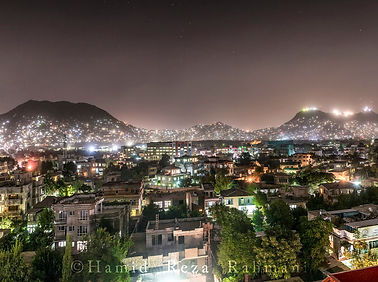
The mountain is named after the Asamai Hindu Temple located at its foothills. [1]
-
Goddess of Hope: The name "Asamai" is derived from Asha, the Hindu "Goddess of Hope," who is considered a form of Maa Durga.
-
The Eternal Flame: The temple at the foothill houses an Akhand Jyoti (continuous flame) that is believed to have been burning uninterrupted for over 2,000 years.
-
The Ancient Peak Shrine: While the main temple is now at the foothill, a small original temple site remains at the mountain's peak, where it is believed the goddess resides. For over a millennium, Afghan Hindus would traditionally climb to the summit during the festival of Navratri to worship.
-
Historic & Military Facts
-
Asamai Mountain has played a critical role in the defense and infrastructure of Kabul throughout the centuries:
-
Ancient Defensive Walls: The mountain is part of the historic Kabul City Walls network. Legend says these walls were built by a tyrannical king using the forced labor of the city's residents; they were designed to protect the capital from southern and south-western invaders.
-
Battle of Asamai Heights (1879): During the Second Anglo-Afghan War, the mountain was the site of a fierce battle. British forces stormed the "Asamai Heights" to dislodge Afghan tribesmen who had taken refuge in an ancient fort on the peak. Several British soldiers were awarded the Victoria Cross for their actions during this siege.
-
Television Hill: In 1973, a large television mast and antennas were installed at the summit, leading locals to colloquially call it TV Hill or Kuh-e-Television.
-
Protector of Kabul: Throughout history, Maa Asamai has been revered as the "Protector of Kabul City" and was the family deity (Kul-Devi) of the Hindu Shahi Kings.
-
Modern Significance
-
Today, the mountain remains a recreational area for residents and tourists seeking hiking trails and sunrise vistas. The AsaMai temple at the foothills was extensively renovated in 2006 with funding from the Bayat Foundation. It stands as a reminder of Kabul's multi-layered history, surviving decades of conflict and serving as a spiritual anchor for the remaining Hindu community in the city
AsaMai Mandir Kabul